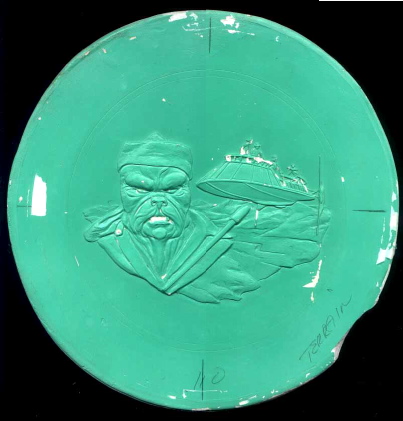
Plaster Sculpting for Barada Coin: To ensure the high level of detail
on Kenner's Power of the Force Collector's Coins, like many minted
coins a master sculpted at a large size to present the high details was needed.
The material of choice was usually plaster, and in this case was used to
sculpt the Barada coin. A sculptor carved the positive image at six times
the production coin's size. You can faintly make out the two concentric circles
that would have served as the guide for the coin's rim. The coin's image
was based on the conceptual artwork that can be found here.
The background terrain was elaborated on at the sculpt stage. On the front
of the sculpt (bottom right) in pencil is marked "terrain"; perhaps this
was an indicator of the changes made?
Once the sculpt was finished, it was coated in a mold release, the green
rubbery layer that coats the piece (it is white plaster underneath evident
from the chips in the photos). Epoxy and dynacast were later used to coat
the piece and the Stage I Hardcopy
was produced. This negative-image piece was then filled with a RTV (room
temperature vulcanizing-it set at room temperature) silicone rubber to get
the positive flexible (the Softcopy) image
used to produce the curved surface of the tooling
master, or Stage II Hardcopy (repeating the epoxy and dynacast method
in the first hardcopy stage) which could be used to produce the image on
the metal coin die.
Very few coin sculpts survived the production process; its surprising samples
even exist today given their delicate composition of soft plaster and that
a number were destroyed in storage at Kenner.
The protoype process beind the Kenner coin line is summarized in the Archive
feature entitled A Coin is Born,
while several of the drawings on which the coin (including the Barada) sculptings
were based can be viewed here.
Description: Steve York
Photo: Steve York
From the collection of Steve York